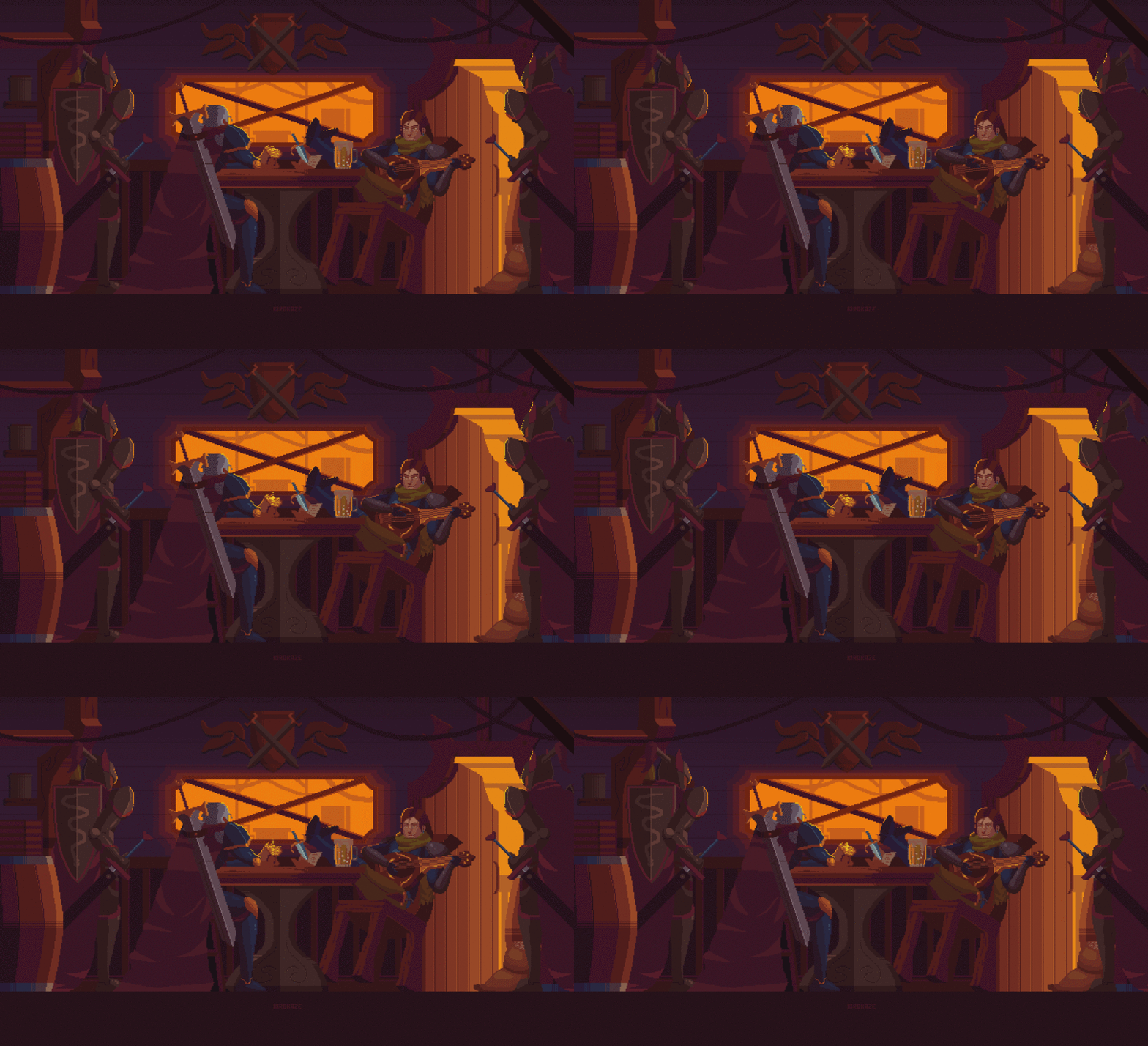
Playing D&D in Your Second Language
Most people assume the hardest part of learning D&D is the rules. The action economy, spell slots, what concentration actually means. But there’s a version of that learning curve that almost nobody talks about: doing all of it in a language that isn’t yours.
The vocabulary alone is brutal. “Yank.” “Crouching.” Spell names that don’t translate cleanly into anything, made-up words that even a dictionary can’t help with. The Chinese Player’s Handbook exists, and it’s genuinely useful, but the attribute names are still in English. So you’re cross-referencing two books, two languages, and a table full of people who grew up with this stuff, just to figure out your character sheet.
Here’s what’s actually interesting, though: the language barrier shapes your play style in ways you wouldn’t expect. When you can’t always find the exact word for what you want to do, you find a simpler way to describe it. You lean on your party to fill in the gaps. That’s not a workaround. That’s just good table communication, and plenty of native English speakers never get there.
The spotlight moments are their own challenge. When the DM turns to you and you’re expected to give a speech, in character, in a second language, in front of six people, the words you do know get squeezed out of your head. You start fine and then you want to stop. Anyone who’s ever blanked during a performance check they didn’t expect to matter will recognize that feeling immediately.
What doesn’t change, regardless of language: the reason people play. The freedom to make choices you’d never make in real life, knowing your party will probably come bail you out anyway. That part is universal. The game earns its own gravity in any language.
One unexpected upside, D&D is genuinely decent spoken-language practice, even if “Tasha’s Hideous Laughter” and “Eldritch Blast” won’t come up in a job interview. The real value is that you have to talk, and the table keeps the conversation moving for you.
And for what it’s worth: thinking in pictures instead of words during a session is not a second-language thing. That might just be how a lot of people actually play.