The Long and Short of It
Resting is one of those systems that looks simple on paper and quietly shapes everything about how your game feels. Get it wrong and your players are either gods who never run out of resources or terrified to sneeze in case they break a 7-day streak.
Short Rests
An hour of downtime. Nothing more strenuous than eating, drinking, reading, or tending to wounds. The main mechanical function is spending Hit Dice, and it’s worth remembering you have as many of those as your character level. A 10th-level fighter can roll ten Hit Dice over the course of a short rest, which is a significant chunk of health that gets overlooked in roleplay-heavy campaigns where combat is sparse.
Attunement also happens here. If you’ve picked up a magic item that requires it, a short rest spent focusing on that item is what unlocks its properties.
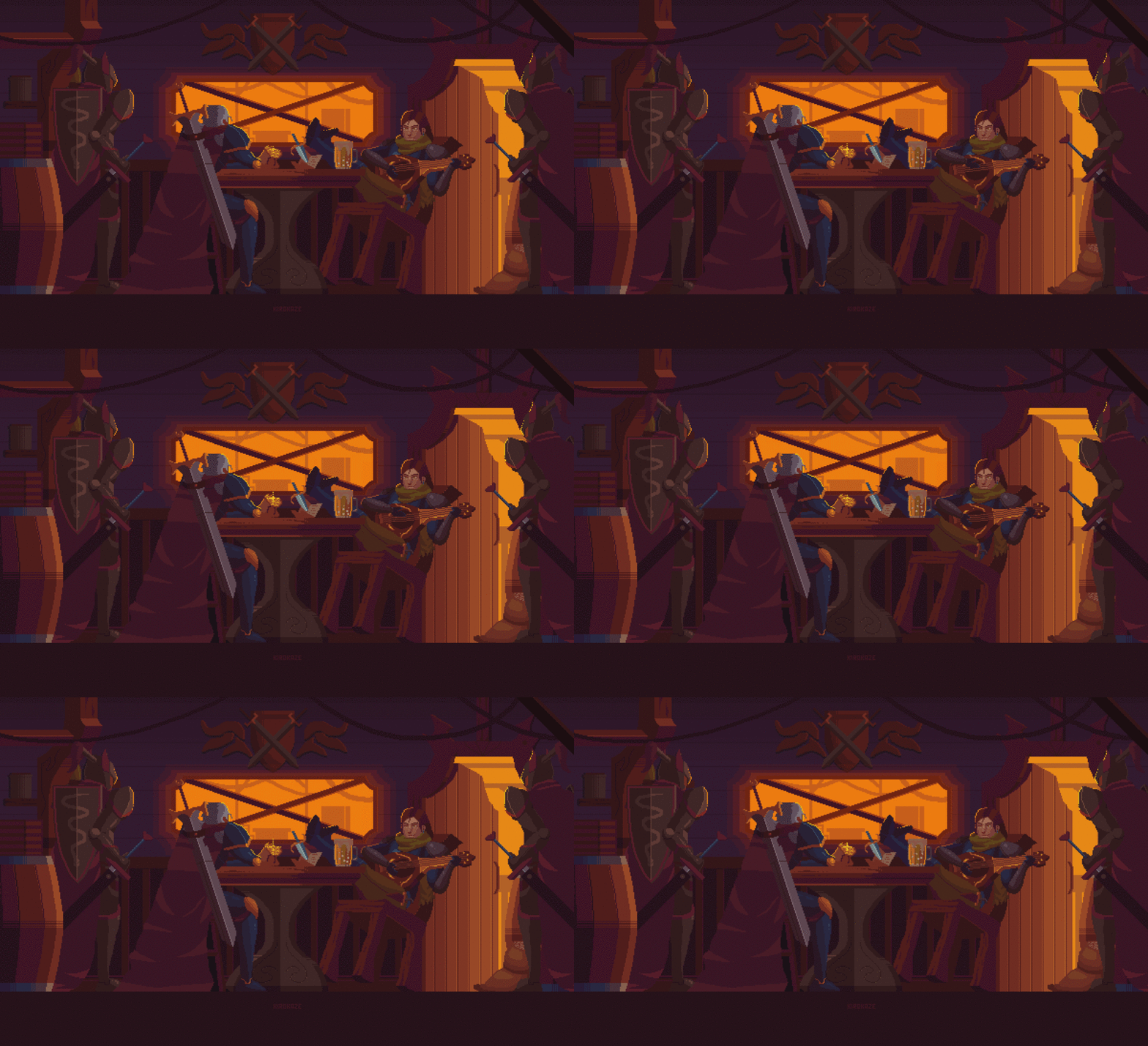
The thing people tend to forget is that short rests are also just genuinely good roleplay windows. Your party just survived something brutal. Take the hour. Let the bard play something awful on their flute and pretend it’s beautiful.
Long Rests
Eight hours, with at least six of those being sleep. A long rest resets your hit points, your Hit Dice, and most class features and spell slots. It’s the hard reset button. The two hours of light activity can include keeping watch, which is where a good DM earns their reputation. Rolling perception during a watch when nothing actually happens is a feature, not a bug.
The Variants
This is where things get genuinely interesting. The Dungeon Master’s Guide offers two optional modes that flip the feel of the whole game.
Epic Heroism compresses a short rest to 5 minutes and a long rest to 1 hour. It’s built for anime-style, back-to-back encounter play where blowing a 7th-level spell slot doesn’t feel reckless because you’ll be fully loaded again before the next fight. It would be a lot to sustain in a long campaign, but for a one-shot it sounds like a genuinely unhinged good time.
Gritty Realism goes the other direction: 8 hours for a short rest, 7 days for a long rest. A week. Every spell slot, every hit point, every class feature becomes a real decision because recovery is measured in calendar days. This mode doesn’t work unless the campaign is built around it. Settlements need to matter. Time needs to have weight. Encounters need to feel rare enough that players don’t just trigger a restart every other session. But when it works, resource management becomes the whole game.
Both variants are in the Dungeon Master’s Guide, page 267.