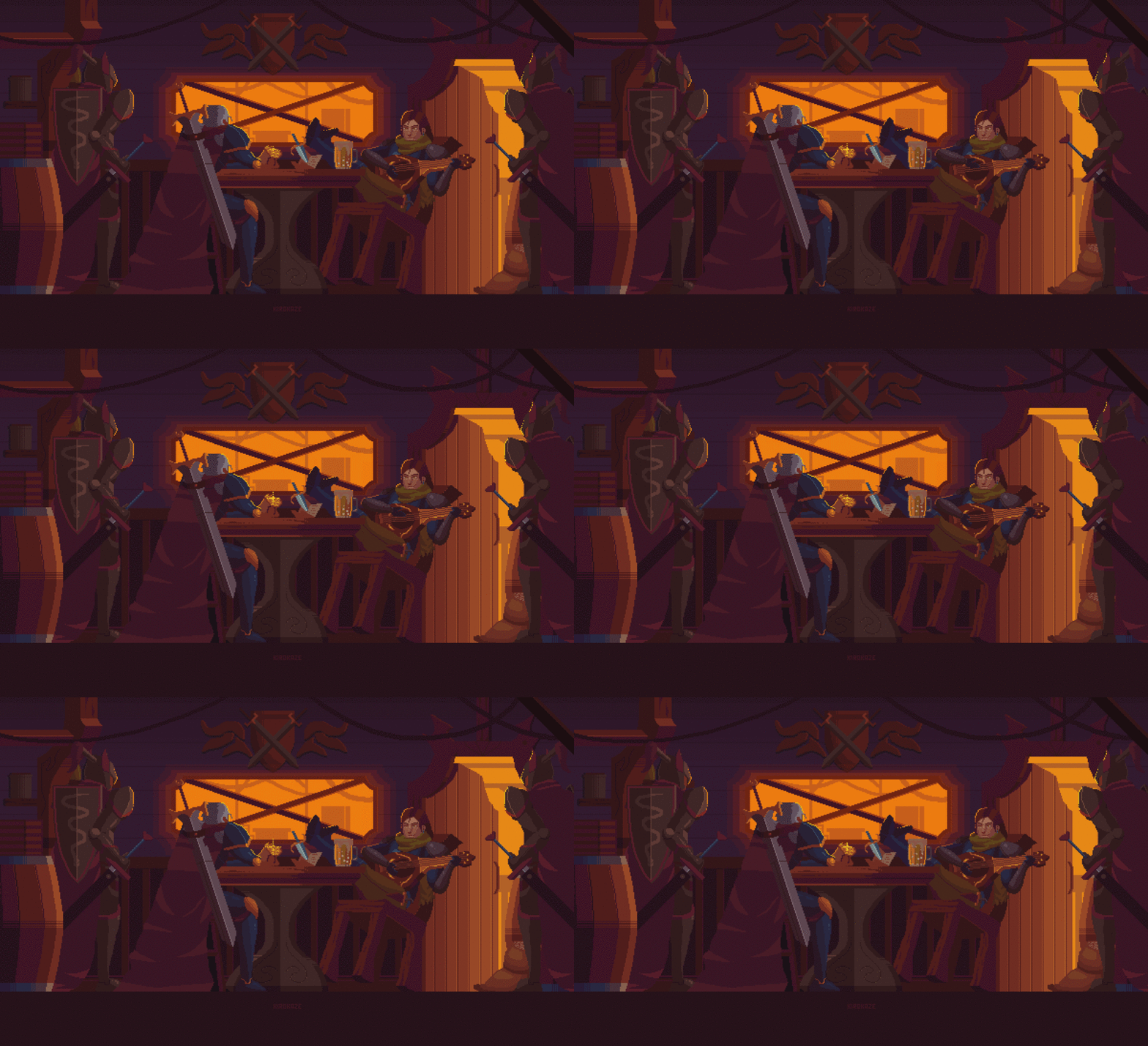
The Bard: A Blank Canvas with Real Teeth
The bard gets dismissed as a support class, which is both accurate and undersells it completely. Yes, you’re buffing your party. Yes, you’re filling gaps. But the bard is also one of the most durable spellcasters in the game, has access to any three skills at character creation, and by level 10 can poach spells from any other class list entirely. That’s not a utility belt. That’s a skeleton key.
Building One
Charisma is your primary stat, full stop. Everything runs through it: your spell save DC, your spell attack modifier, and the number of times per long rest you can hand out Bardic Inspiration. Dexterity is your strong second, pushing you toward finesse weapons and shoring up your light armor AC. The 1d8 hit die makes you one of the tougher spellcasting classes, so lean into that.
For proficiencies, you start with light armor, simple weapons, and a handful of martial options: hand crossbows, longswords, rapiers, shortswords. Notice the pattern. These are all weapons that want Dexterity. The class is quietly nudging you in a direction even before you pick a subclass.
Skills are where the bard genuinely surprises new players. Most classes pick from a curated list of four to seven options. Bards choose any three from the entire skill list. Pair that with Jack of All Trades at level 2, which adds half your proficiency bonus to any check you aren’t already proficient in, and you have a character who is meaningfully competent at almost everything. Whether that’s a feature or a flaw depends entirely on how you like your D&D.
The Features That Actually Matter
Bardic Inspiration is the engine of this class. Bonus action, 60-foot range, one creature gains a die they can add to any ability check, attack roll, or saving throw within the next 10 minutes. Crucially, they can wait until after rolling the d20 to decide whether to use it, which removes most of the guesswork. The die starts at d6 and scales up to d12 by level 15. You have uses equal to your Charisma modifier (minimum one), and at level 5 Font of Inspiration lets you recharge on a short rest. It gets underused more than almost any feature in the game, and that is a mistake your party will feel.
Expertise at level 3 lets you double your proficiency bonus on two chosen skills. Pick the things your character concept lives and dies by, because it stacks fast. You get two more picks at level 10.
Magical Secrets at level 10 is where experienced players lose their minds and new players accidentally grab Fireball. You choose two spells from any class, any list, as long as you have the spell slots to cast them. It repeats at levels 14 and 18. If you’ve been paying attention to what your party lacks, this is where you fix it.
The Honest Take
The bard is a genuinely excellent class for a veteran player who wants to make other people’s experience better, and a somewhat directionless one for a newcomer who isn’t sure what they want yet. The blank canvas quality is real. The class won’t punish you for experimenting, but it also won’t push you toward anything in particular. That’s a design philosophy, not a flaw, but it’s worth knowing before you sit down at the table.
The 20th-level capstone, Superior Inspiration, gives you one free Bardic Inspiration at the start of each combat if you’ve run dry. It’s fine. It is, as these things tend to be, a bit anticlimactic for a class that’s capable of so much.