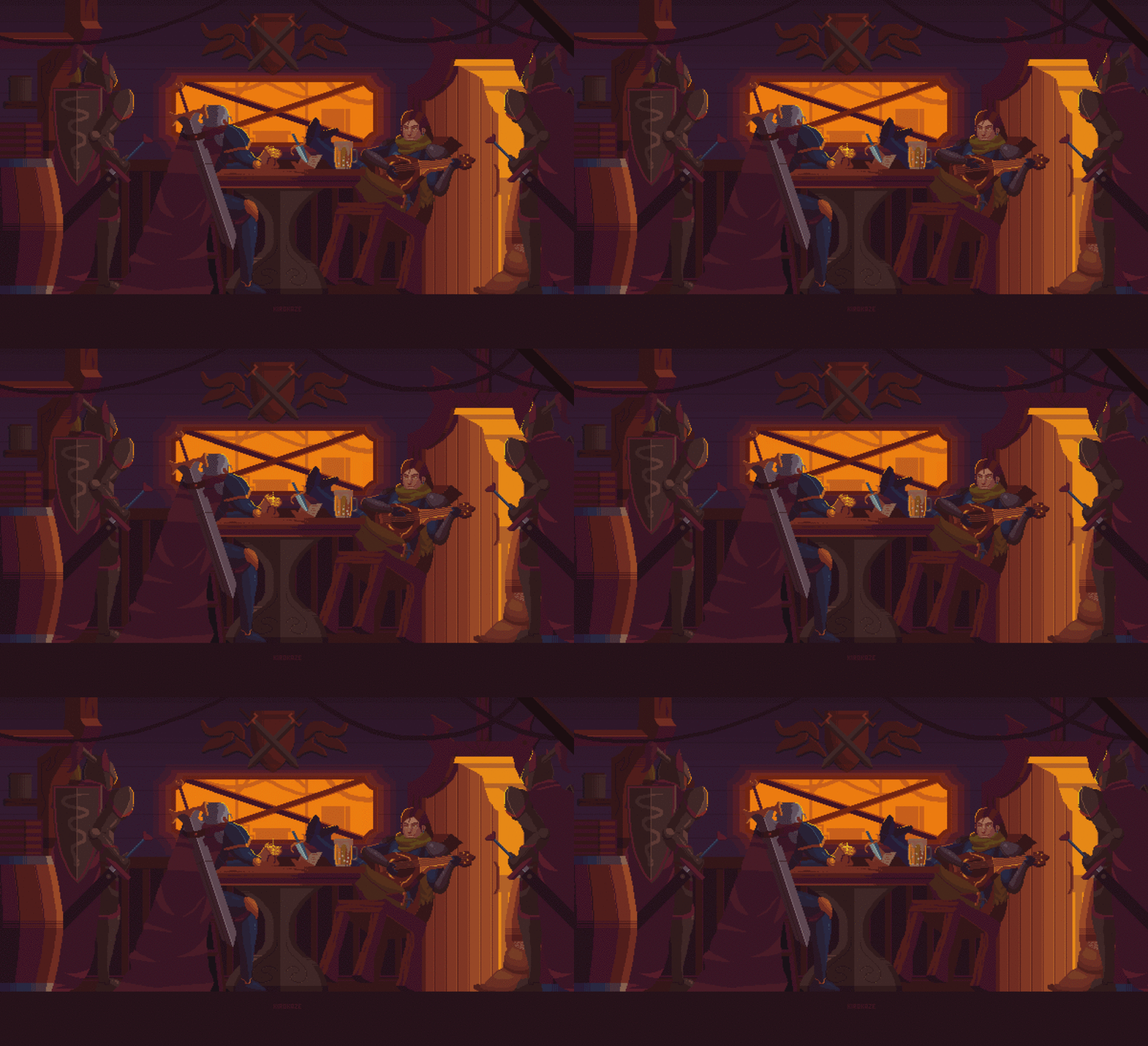
Downtime That Actually Does Something
Downtime activities in 5e have a reputation problem. The official options read like a chore chart: chop wood, earn 2 silver, repeat until adventure. The good news is that the framework is there; the activities just need to be treated as potential sessions, not accounting exercises.
Jobs and the Bridge Problem
The instinct with jobs is to reduce them to a skill check and a gold payout. That works fine if you want fine. What works better is giving players a thing they’re responsible for and then throwing problems at it.
A bridge is a perfect example. You post your party there to collect tolls, and suddenly wizards are trying to float past without paying, trolls want to perform ancestral rituals on the stonework, and a giant is curious about the little people in the guardhouse. The party didn’t sign up to care about this bridge. Then they did. That investment is the whole game, and a job structure is one of the cleanest ways to generate it from nothing.
Keep jobs low stakes deliberately. Players who freeze up during boss fights because they’re terrified of making a wrong call tend to open up when the worst outcome is “you didn’t get paid.” New players especially benefit from this. Nobody’s experience with 5e rules gives them an edge when the scenario is just “figure out what to do about the troll.”
Pit Fighting as a Laboratory
Pit fighting is underrated as a DM tool because it’s secretly a testing environment. You can throw creatures into an arena that have no business being in your campaign setting. Norse world? Sure, here’s something from Egyptian mythology. Nobody knows how it got here. Don’t worry about it.
More usefully, if you’re nervous about how a particular creature ability will play at your table, pit fighting lets you run a dress rehearsal. Throw in something with a similar mechanic, watch how your players respond, and adjust accordingly before it matters. The pit also gives you a story reason why death isn’t on the table. The crowd paid to see a fight, not a funeral; someone pulls the loser out before the last hit lands.
Gambling Games Worth Actually Playing
Forget the gambling rules in the DMG. The interesting territory is running actual micro-games at the table. Blackjack moves fast enough that you can bust through three rounds in minutes. Coin flipping with a double-or-nothing structure lets you dangle absurd gold totals that almost nobody will reach. A three-dice game where you roll a d12, d8, and d6, pick one to keep, roll the remaining two, pick again, then keep the last one, feels like it has deep strategic layers. It almost certainly doesn’t, but it feels like it does, and that’s the point.
Blessings Over Inspiration
Religious ceremonies in the book give you inspiration. That’s not wrong, it’s just flat. A better use of the same fictional space is blessings: very low power, active abilities with long cooldowns.
Something like a once-per-week 30-foot leap sounds trivial. In practice, a player will forget it’s on their sheet for three sessions, then look down at a crucial moment and realize they can cross the chasm. That’s not a powerful ability doing work; that’s lateral thinking being rewarded. Keep blessings open-ended enough that they apply to more than one type of problem, keep the cooldown long enough that they can’t be spammed, and keep them easy to acquire. The goal is flavor that occasionally becomes a clever solution, not a balance headache.